Verkauf
Im Folgenden gehen wir auf den Überpunkt "Verkauf" ein.
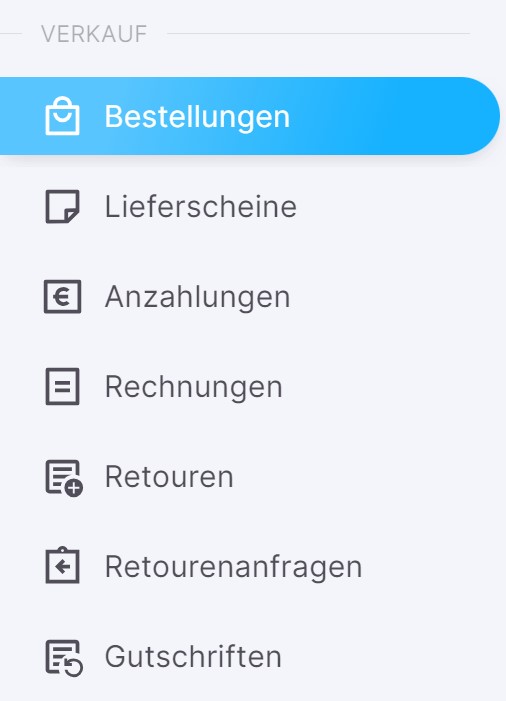
Der Überpunkt "Verkauf" beinhaltet die folgenden Unterpunkte:
Bestellungen
Lieferscheine
Anzahlungen
Rechnungen
Retouren
Retourenanfragen
Gutschriften
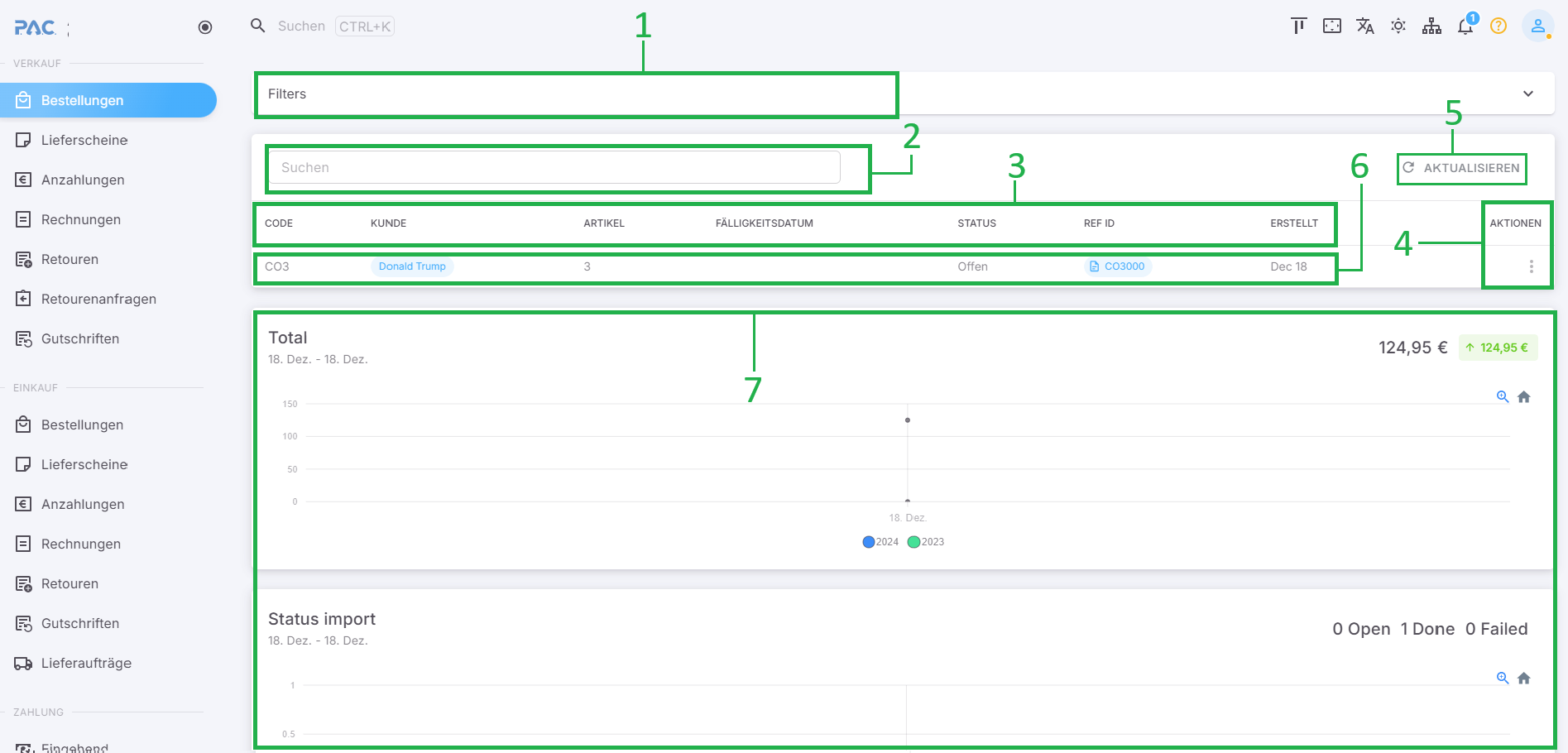
Die Unterpunkte ähneln sich im Aufbau, unterscheiden sich jedoch in den Inhalten. Hier sehen Sie zum Beispiel den Aufbau der Seite "Bestellungen":
Erläuterung der Menüpunkte
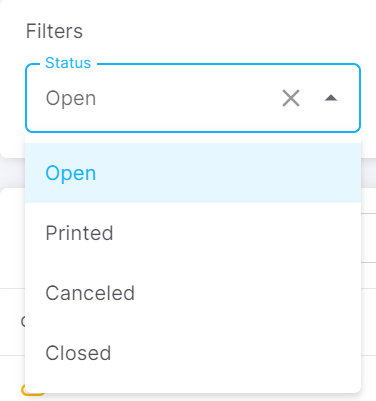
Filter: Hier können Sie zwischen verschiedenen Einstellungen wechseln.
Lokales Suchfeld: Hier können ausschließlich Bestellungen durchsucht werden.
Tabellenleiste: Die Menüpunkte der Tabelle werden wie folgt erklärt:
Code: Die Barcode-Nummer.
Kunde: Name des Kunden.
Artikel: Anzahl der bestellten Artikel.
Fälligkeitsdatum: Datum, bis zu dem der Auftrag erfüllt sein soll.
Status: Status der Bestellung (kann mittels Filter angepasst werden).
REF ID: Referenzidentifikationsnummer zur Kennzeichnung der Bestellungen.
Erstellt: Datum der Erstellung des Auftrags.
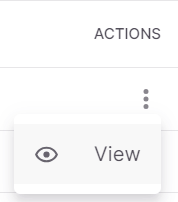
Aktionen: Zusätzliche Funktionen.
Aufklappen: Hier erhalten Sie einige Informationen kompakt zusammengefasst und ein Label zum Drucken. Mehr zu Labels finden Sie im Punkt "Allgemeines" unter "Label und Komplettansicht".
Seite aktualisieren: Laden Sie die Seite und deren Daten neu.
Aufträge: Hier sehen Sie die aktiven Bestellungen.
Statistiken: Weiter unten auf der Seite finden Sie Statistiken zur Übersicht und Kontrolle.
Diese bieten detaillierte Einblicke, wenn Sie mit der Maus darüberfahren.
Sale
In the following section, we will discuss the main category "Sale."
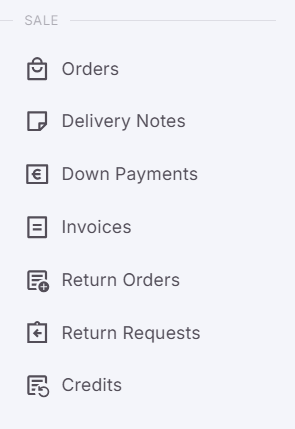
The "Sale" category includes the following subcategories:
Orders
Delivery Notes
Down Payments
Invoices
Return Orders
Return Requests
Credits
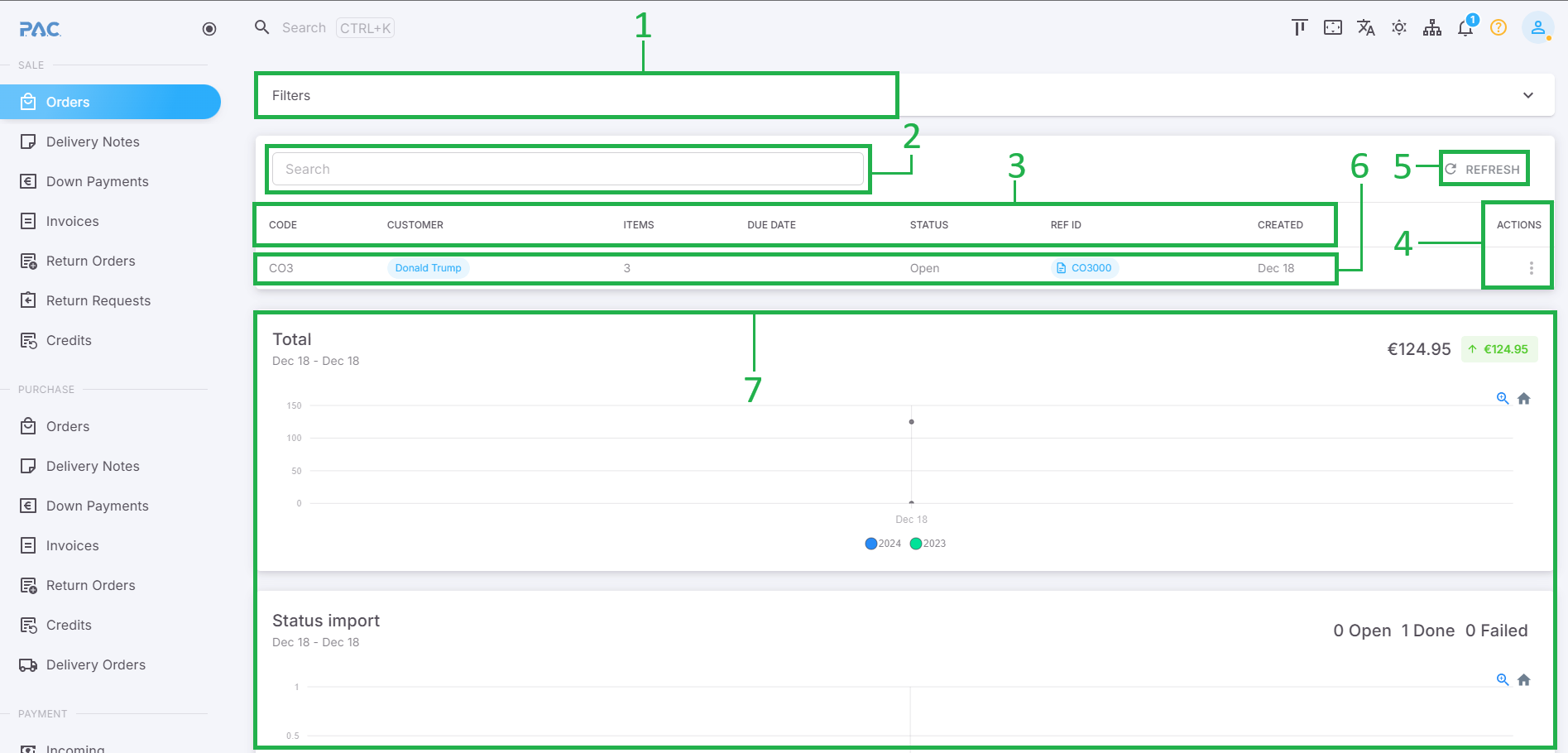
These subcategories have a similar structure but differ in content. Here is an example of the "Orders" page layout:
Explanation of Menu Items
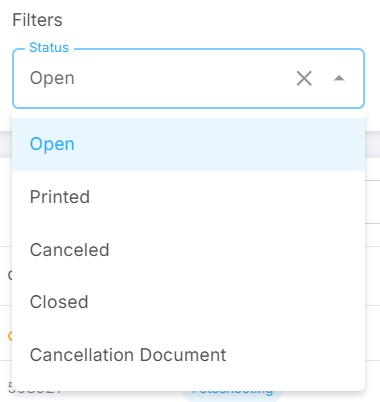
Filter: Here, you can switch between different settings.
Local Search Field: Here, you can search exclusively for orders.
Table Menu: The table's menu items are explained as follows:
Code: The barcode number.
Customer: Name of the customer.
Items: Number of items ordered.
Due Date: The date by which the order should be fulfilled.
Status: Status of the order (can be adjusted using the filter).
REF ID: Reference identification number for labeling orders.
Created: The date the order was created.
Actions: Additional functions.
Expand: Here, you will find a summary of information and a label for printing. More about labels can be found in the "General" section under "Labels and Full View."
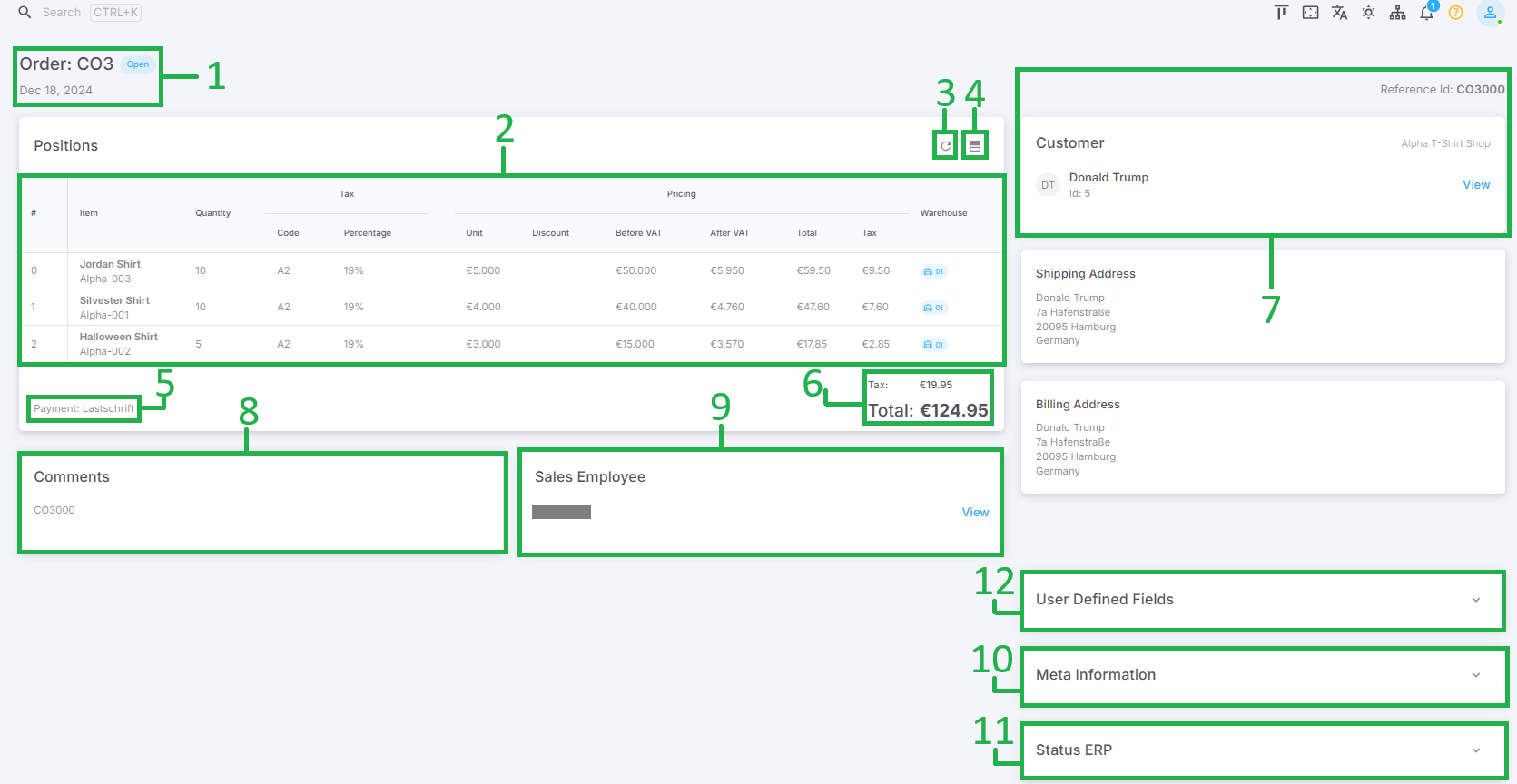
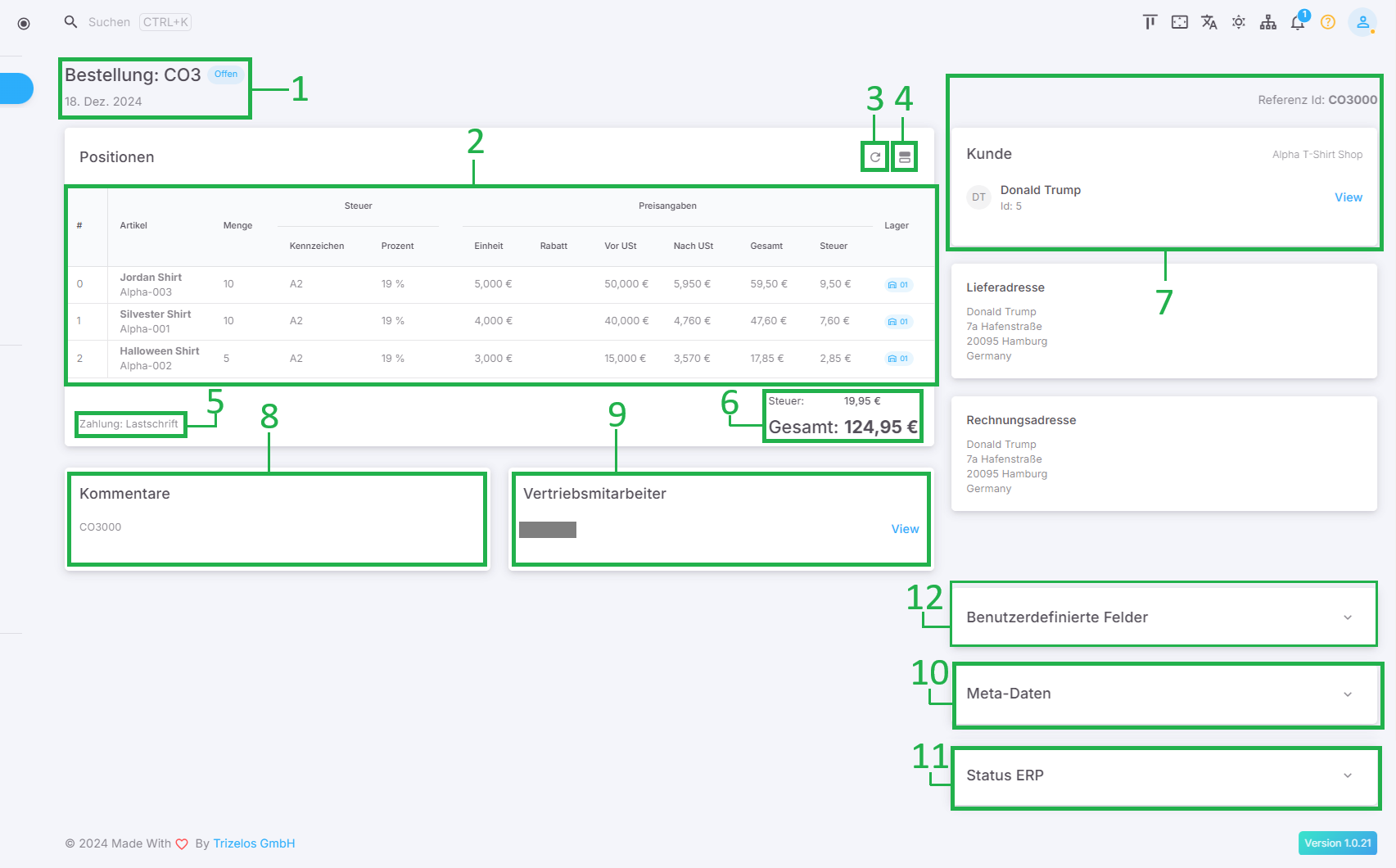
Order Information: Displays key details about the order, including the order ID, current status, due date, and order date.
Order List: Shows the ordered items along with all relevant details for tax calculation and pricing. This includes VAT, discounts, the net price (before tax), and the gross price (after tax). Use the scroll bar to view all data.
Refresh Button: Refreshes the order and reloads all data.
Change View: Allows you to adjust the display format according to your needs.
Payment Method: Indicates the payment method used for this order.
Price Calculation: Displays the total price of the order, including tax components.
Customer Information: Shows the customer data. For a detailed view, use the "View" button.
Comments: Displays any comments related to the order in this section.
Sales Representative: Indicates which sales representative is responsible for this order.
Metadata: Provides access to the metadata of the order, such as specific attributes or system information.
ERP Status: Displays the current synchronization and import status of the order within the ERP system (e.g., SAP).
Adjust Page and Pagination: Here, you can adjust how many search results you want to see on the page and navigate up to page 99.
Aufträge: Here you can see the current orders.
Statistics: Further down the page, you will find statistics for overview and control.
These provide detailed insights when you hover over them with the mouse.